

Aviation History
Aviation History Timeline: Major Events & Milestones in Flight
Feb
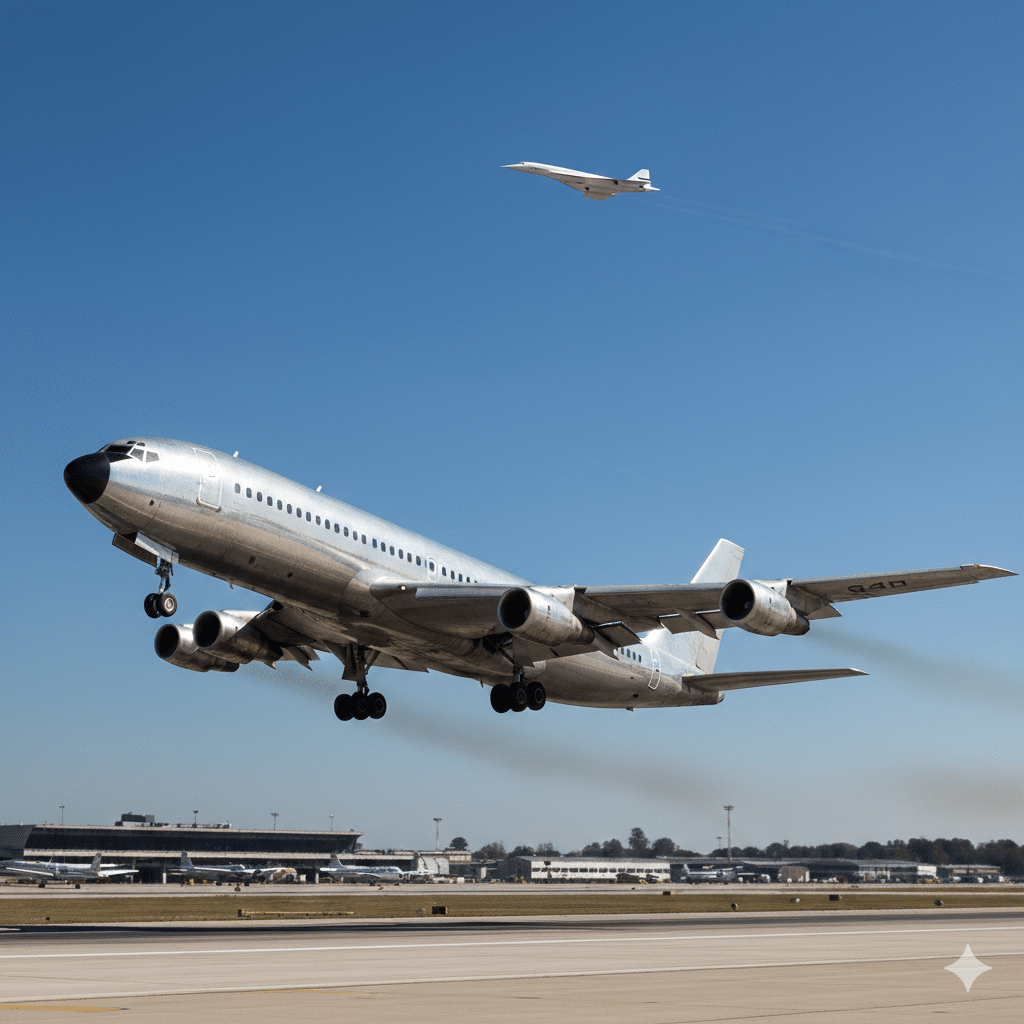
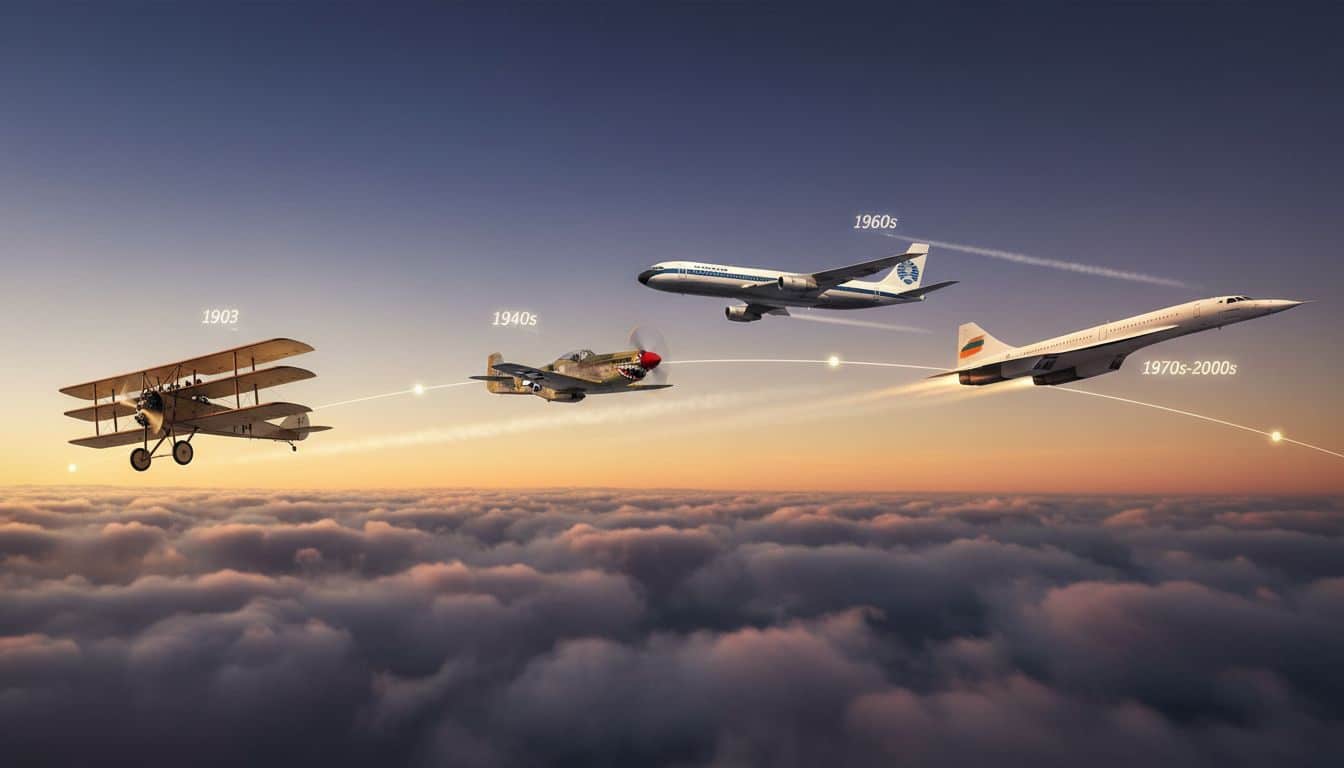
Explore pivotal historical events in aviation through a comprehensive timeline of innovation and technological breakthroughs. From the first flight achieved by Wilbur and Orville Wright to the rise of the first commercial jet airliner, aviation has continually reshaped global transportation. What began as experimental flying machine concepts evolved into sustained flight, supersonic travel, and modern aerospace engineering.
The 1903 Wright Flyer achieved sustained flight for 12 seconds, marking the basis of aviation as we know it. From that moment forward, pioneers, engineers, and visionary aviators unlocked the full potential of aviation, transforming a dream into a global industry.
Aviation History Timeline: Key Events and Milestones in Aviation History
| Year | Event | Significance |
|---|---|---|
| 1903 | World’s First Powered Flight | Orville Wright pilots the Wright Flyer for 12 seconds at Kitty Hawk. |
| 1909 | Flight Across the English Channel | Louis Blériot proves aircraft can fly across the English Channel. |
| 1914–1918 | World War I Aviation Expansion | Rapid military aircraft development establishes modern American aviation and European air power. |
| 1919 | Nonstop Transatlantic Flight | First nonstop transatlantic flight demonstrates intercontinental capability. |
| 1927 | Charles Lindbergh’s Solo Flight | Charles Lindbergh flies the Spirit of St. Louis across the Atlantic, making history. |
| 1939–1945 | World War II Aviation Acceleration | Mass aircraft production and early jet propulsion systems emerge. |
| 1947 | Breaking the Speed of Sound | Chuck Yeager exceeds the speed of sound, marking the first time in history supersonic flight was achieved. |
| 1952 | World’s First Commercial Jet Service | The first commercial jet airliner begins passenger service. |
| 1958 | International Aviation Governance | The International Civil Aviation Organization strengthens global aviation standards. |
| 1970 | Boeing 707 and 747 Jet Expansion | The Boeing 707 and later wide-body jets revolutionize international air travel. |
| 2020s | Sustainable Aviation Initiatives | Industry shifts toward cleaner propulsion and sustainable operations. |
The Beginnings of Aviation (Pre-1903)
Early Innovations in Flight
The dream of human flight dates back centuries. Leonardo da Vinci sketched early flying machine concepts long before powered engines existed. These early designs explored lift, propulsion, and mechanical motion, forming the intellectual groundwork for aerospace history.
The Wright Brothers and the First Aircraft
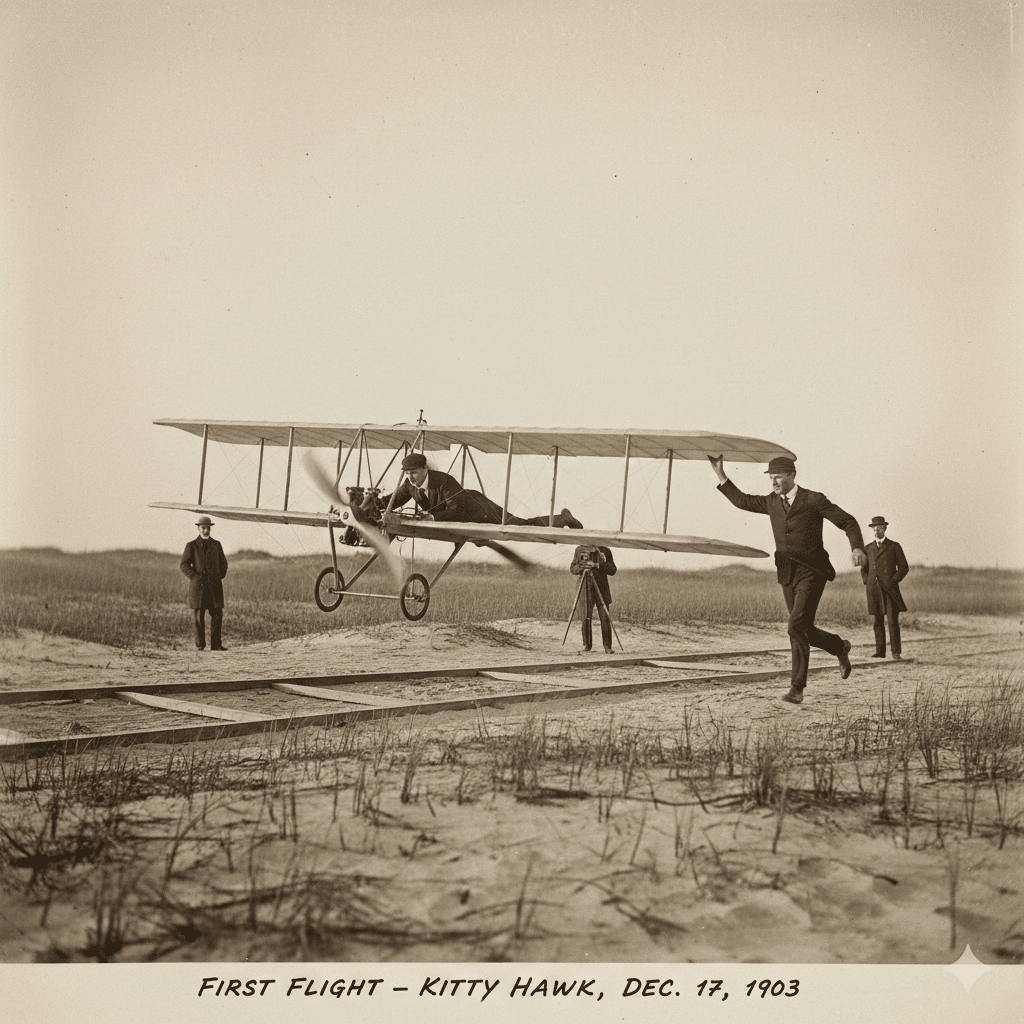
On December 17, 1903, Wilbur and Orville Wright achieved the world’s first successful flight of a powered first aircraft. Their achievement at Kitty Hawk marked the first time in history that controlled, powered flight was sustained and repeatable.
Development of Heavier-Than-Air Flight
Following the Wright brothers’ breakthrough, engineers refined propulsion systems and aircraft structures. Improvements in more powerful engines allowed longer and safer journeys, expanding the future of North American aviation and European aviation development.
Aviation During Wartime Expansion
Impact of World War I
World War I marked a defining chapter in history of aviation. Military demands drove innovation in aircraft speed, maneuverability, and reliability, establishing aviation as a decisive strategic tool.
World War II and German Aviation Advances
World War II accelerated progress dramatically. German aviation engineers developed advanced jet prototypes, while Allied forces expanded bomber and fighter capabilities. The war reshaped global aerospace power structures.
The Rise of American Aviation and the U.S. Air Force
In 1947, the United States Air Force was officially established, recognizing the strategic importance of air power. This marked a major milestone in American aviation and defense strategy.
The Rise of Commercial Aviation
Pioneering Airlines and Global Routes
Airlines opened routes that enabled flight around the world, shrinking continents into connected networks. The aviation industry expanded rapidly as commercial demand increased.
Regulatory Milestones and Global Standards
The creation of the International Civil Aviation Organization and the Federal Aviation Administration (FAA) ensured standardized global regulations. These institutions shaped modern aviation safety systems and air traffic management.
The Jet Airliner Era
The introduction of the jet airliner, including the Boeing 707, transformed long-distance travel. This era marked the beginning of the modern commercial aviation age.
The Jet Age and Aerospace Expansion
Concorde and Supersonic Travel
The Concorde represented the world’s first sustained supersonic passenger service, flying faster than the speed of sound and redefining international business travel.
The Space Race and the National Air and Space Museum
The Space Race expanded aerospace engineering beyond the atmosphere. Institutions like the National Air and Space Museum preserve these milestones and document major achievements in aerospace history.
Made History: Record-Breaking Solo Flights
From Lindbergh’s solo flight to modern endurance records, aviators continued to make history, proving the reliability and range of modern aircraft.
Modern Aviation and the Future
Current State of Global Aviation
Today, aviation connects economies and cultures. Publications such as Aviation Magazine regularly document breakthroughs in aircraft design, sustainability, and propulsion systems.
Sustainable Aviation and the Next Era
Modern initiatives focus on alternative fuels, electric propulsion, and carbon reduction strategies. These innovations aim to enhance the environmental sustainability of global aviation.
The Future of Flight
Emerging hypersonic aircraft and autonomous systems could once again redefine the boundaries of flight. As aviation continues evolving, the foundational breakthroughs of early pioneers remain central to its identity.
Frequently Asked Questions About Aviation History
What was the first powered flight in aviation history?
The first powered flight took place on December 17, 1903, when Orville Wright piloted the Wright Flyer for 12 seconds at Kitty Hawk, North Carolina. This marked the world’s first sustained and controlled powered flight of a heavier-than-air aircraft.
Who completed the first nonstop transatlantic flight?
The first nonstop transatlantic flight was completed in 1919 by John Alcock and Arthur Brown. In 1927, Charles Lindbergh became the first aviator to fly solo nonstop across the Atlantic aboard the Spirit of St. Louis.
When was the speed of sound first broken?
The speed of sound was first broken in 1947 when Chuck Yeager piloted the Bell X-1 aircraft past Mach 1. This milestone marked the beginning of the supersonic era in aviation.
What was the first commercial jet airliner?
The first commercial jet airliner entered passenger service in 1952, marking the beginning of the jet age. Aircraft such as the Boeing 707 later expanded international commercial air travel.
What role did World War I and World War II play in aviation development?
Both World War I and World War II significantly accelerated aircraft innovation. Wartime demands advanced propulsion systems, aerodynamics, manufacturing, and military aviation strategy, shaping modern aerospace engineering.
What is the future of aviation?
The future of aviation includes sustainable aviation fuels, electric propulsion systems, autonomous aircraft, and potentially hypersonic travel. These innovations aim to increase efficiency while reducing environmental impact.