

Aviation News
Up To 17-Hour Nonstop Flights: Delta Air Lines’ 10 New Ultra-Long Routes In 2026

Jan
Most people don’t realise Delta operates one in every 20 of the world’s long-haul services, and in 2026 it’s launching 10 ultra-long routes with up to 17-hour nonstop flights. You’ll see LA, Atlanta and Detroit linking straight to places like Melbourne (first time for Delta) and Hong Kong, and yes there’s a new Riyadh leg backed by Saudi ties, sounds wild, right? You’ll want to weigh comfort, timing and jetlag, but hey, direct beats layovers usually, so how’s your sleep plan?
Delta is expanding ultra-long-haul flying in 2026 with new nonstop routes reaching up to 17 hours. The headline additions include
LAX–Melbourne (Delta’s first Melbourne service), LAX–Hong Kong (returning after years), and ATL–Riyadh
(a strategic Middle East launch tied to Saudi partnerships). Delta’s longest staples remain Johannesburg–Atlanta and Cape Town–Atlanta.
Most of these marathon sectors are operated by the Airbus A350-900, which is better suited to passenger comfort on 15–17 hour flights.
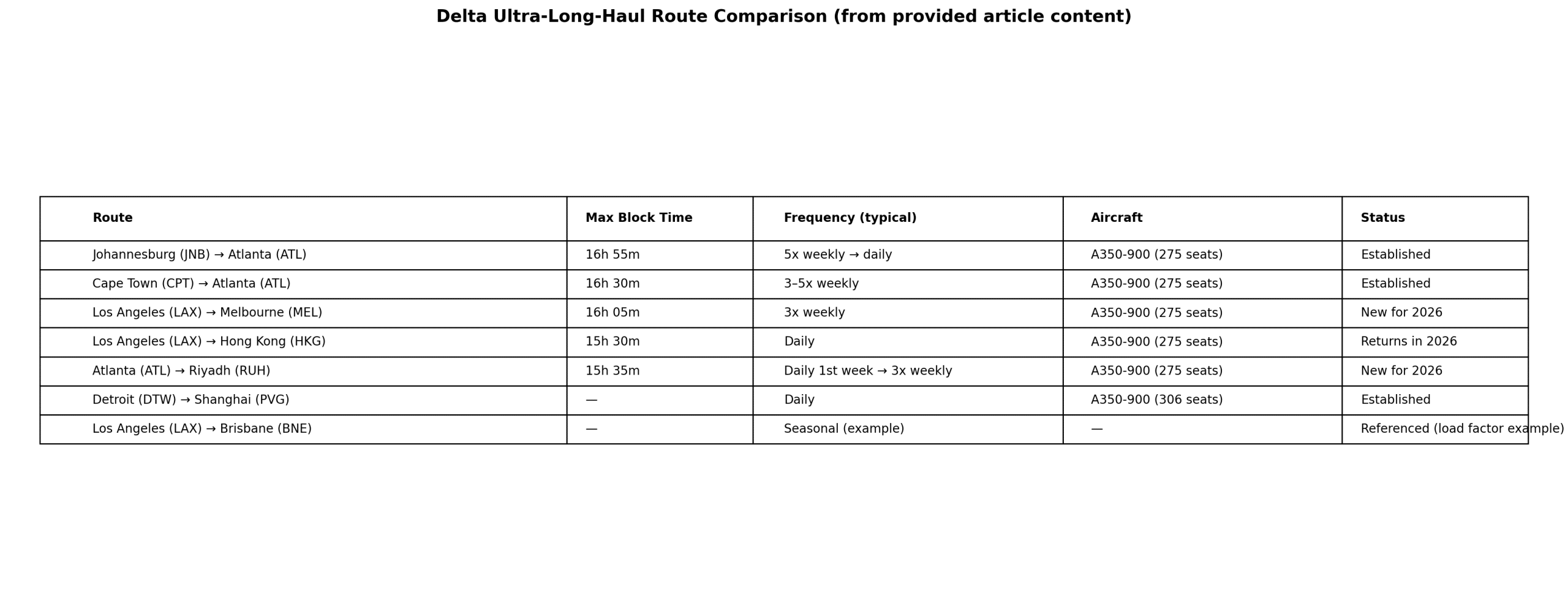
- Longest Delta routes: Johannesburg–Atlanta (16h 55m), Cape Town–Atlanta (16h 30m)
- New/returning in 2026: LAX–Melbourne (16h 05m), LAX–Hong Kong (15h 30m), ATL–Riyadh (15h 35m)
- What it means: fewer layovers, more nonstop choices—plan sleep, hydration, and movement for jet lag and fatigue
So, What Are Delta’s Longest Routes?

Delta’s roster reads like a world map of endurance flights. If you scan the top ten, you’ll see Delta runs one in every 20 of the world’s long-haul services and more than one in eight US long links, and it’s the largest US operator to Africa. You already know the top two are unsurprising – Johannesburg-Atlanta (16h 55m) and Cape Town-Atlanta (16h 30m) – but three entries are new for 2026.
The Usual Suspects: Top Two Routes You’d Expect
You’ll spot the top two immediately: Johannesburg to Atlanta (up to 16h 55m) and Cape Town to Atlanta (up to 16h 30m). They’re flown mainly with the 275-seat A350-900, Johannesburg is five weekly to daily and Cape Town three to five weekly, so if you track the longest-time flights those are the heavy hitters you’ll keep seeing on schedules.
New Kids on the Block: 2026’s Fresh Routes
You’ve also got the newcomers shaking things up: Los Angeles-Melbourne (16h 05m, three weekly), Los Angeles-Hong Kong (15h 30m, daily), and Atlanta-Riyadh (15h 35m, three weekly). The Riyadh link in particular is a strategic push backed by Saudi Air Connectivity funding, a Saudia codeshare and a Riyadh Air partnership – so if you’re mapping network growth, that one’s a standout.
Digging deeper, LAX-Melbourne launched on December 3 – Delta’s first time into Victoria’s capital – and uses the 275-seat A350-900 three times weekly. LAX-Hong Kong returns on June 6, restoring service last flown in 2016, while Atlanta-Riyadh starts October 24 with an initial daily week then settles to three weekly, immediately slotting in as Delta’s sixth-longest route. If you’re watching fleet deployment, the A350-900 is clearly the workhorse here.

A320 Basics, Limitations & SOPs
Complete A320 study guide by an Airbus pilot & instructor.Clear systems, logic & SOPs.
PDF • 365 pages • Lifetime updates
Why These Routes Matter to Travelers
A recent surge in ultra-long services is changing what you can do without a connection: Delta added LA-Melbourne, LA-Hong Kong and Atlanta-Riyadh, which helps explain why it now operates one in every 20 of the world’s long-haul flights and more than one in eight of all US long-haul links. That means more nonstop choices for you, stronger US-Africa coverage as the largest US carrier to Africa, and real competition on flight times and schedules.
Exploring New Destinations: More Choices for Us
You get direct access to places that used to mean at least one stop – LA to Melbourne (three weekly), LA to Hong Kong (daily) and Atlanta to Riyadh (three weekly) are examples. More nonstop frequencies cut total trip time, give you more departure options, and let you book based on convenience not routing. For leisure or business, that extra direct seat can change whether you go at all.
The Impact on Travel Times and Comfort
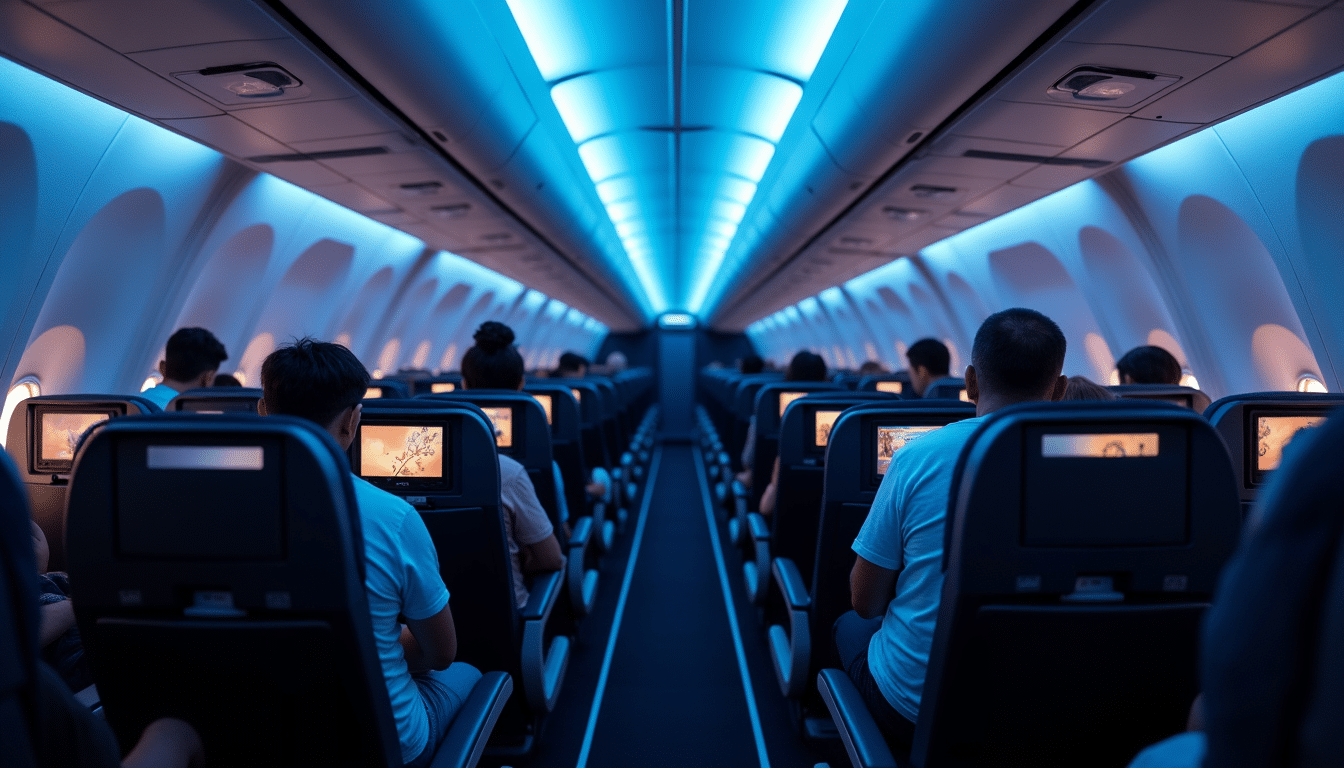
Nonstops shave hours off door-to-door trips, but they also mean you’ll be on a plane for longer stretches – some routes hit up to 16h 55m. Delta mainly flies these on the A350-900, which helps with cabin comfort, yet you still need to plan sleep, hydration and movement carefully to avoid exhaustion and jet lag.
On the A350 you’ll notice better cabin humidity, lower cabin altitude and mood lighting, so your body fares better than on older types. Case in point: Detroit-Shanghai runs daily on a 306-seat A350-900, while Johannesburg-Atlanta reaches 16h 55m up to daily on a 275-seat A350-900. Load and frequency matter too – new routes like LA-Brisbane saw an 85% seat fill in season, which affects seat choice and cabin crowding, so pick flights, cabins and schedules that suit how you handle long days in the air.
The Game-Changer: Delta’s New Route to Riyadh
You’re sitting at ATL gate A, passport in hand, when the announcement comes: Delta’s new Atlanta-Riyadh service departs October 24. It clocks a maximum block time of 15h 35m, will operate on a 275-seat A350-900, and runs daily in its first week, then three weekly. Backed by the Saudi Air Connectivity Program, a Saudia codeshare and a Riyadh Air partnership, this isn’t just another route – it’s a strategic play that plugs Delta deeper into the Middle East network you use or connect through.
Why This Route’s a Big Deal
For you who track long-haul networks, this move matters: the Riyadh link becomes Delta’s sixth-longest route and its new third-longest from Atlanta, at a time when Delta runs one in every 20 of the world’s long-haul services and more than one in eight of US long-haul links. Because Delta is the largest US operator to Africa and is pushing to grow in the Middle East, this route strengthens its global balance and gives you more seamless connections across SkyTeam partners.
What to Expect on This Long Journey
Picture the cabin on an A350-900: modern mood lighting, seatback entertainment and Wi-Fi to keep you working or streaming through the 15h 35m block time. You’ll see a mix of business and leisure travelers on the three-weekly rhythm after launch, cabin service timed for two main meals, and plenty of time to sleep if you plan it right. Seats are packed into a 275-seat layout, so book early if you want space.
Expect the service rhythm to mirror other ultra-long Delta routes: takeoff service, a long dark period for rest, then a full meal before descent. Because of the Saudia codeshare and Riyadh Air ties, you can connect onward across Saudi Arabia and the region – handy if your final stop isn’t Riyadh. Practical tip: hydrate, book a bulkhead or exit-row if you need legroom, and stagger screen time to beat a roughly 7-8 hour eastbound time shift.
My Take on Delta’s Use of A350-900s
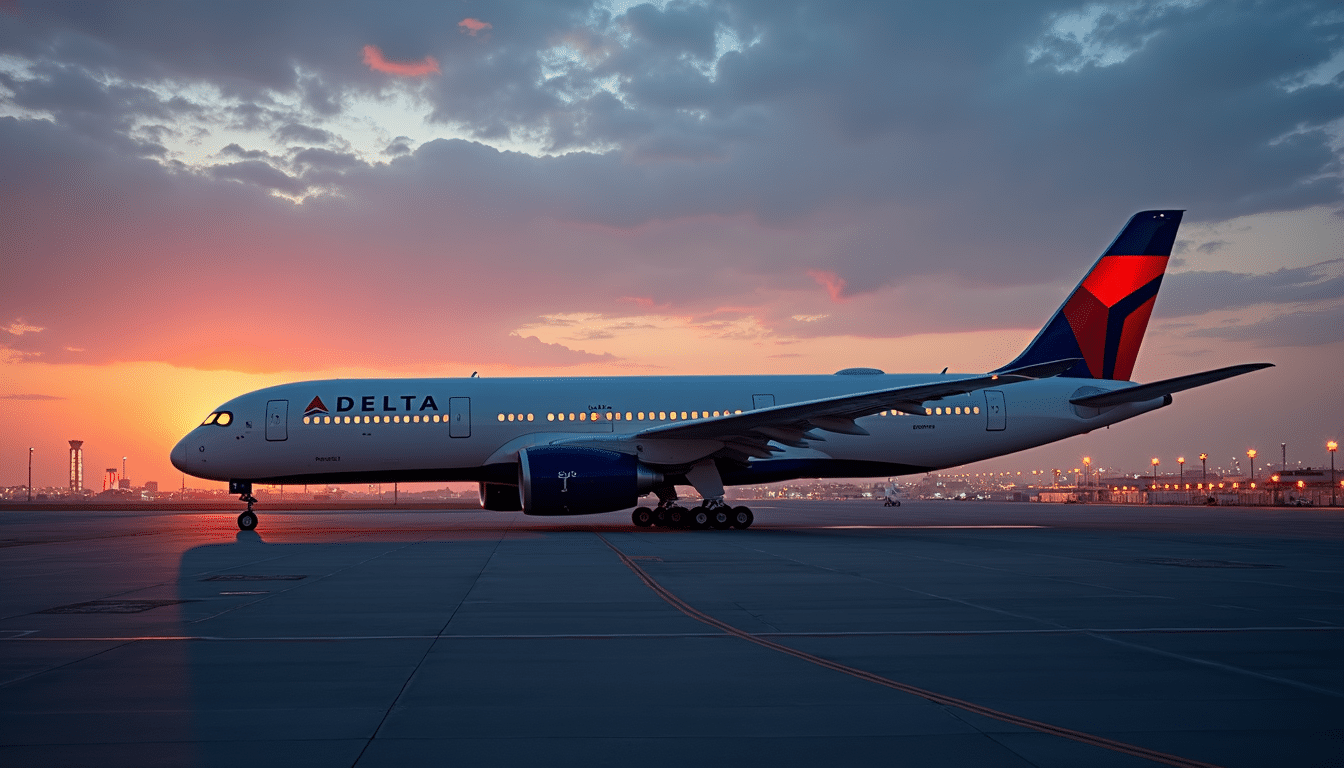
Compared with older widebodies, Delta’s A350-900s let you fly ultra-long sectors with fewer compromises: the type handles legs like Johannesburg-Atlanta (up to 16h 55m) and Cape Town-Atlanta (16h 30m) while giving Delta the flexibility to deploy either a 275-seat or 306-seat layout. You get improved economics that support more nonstop markets, and given Delta operates one in every 20 of the world’s long-haul services (and over one in eight of US long-haul links), that fleet choice matters a lot to your route map.
Comfort and Features of the Aircraft
Compared to legacy cabins, the A350’s environment is noticeably kinder on you: cabin altitude sits around 6,000 ft, humidity is higher, and noise levels drop thanks to the Rolls-Royce Trent XWB engines, so fatigue is reduced on 15-17 hour flights. Delta’s configs vary, so your personal space depends on whether you’re on a 275-seat or 306-seat aircraft, but expect modern mood lighting, larger overhead bins, and better air quality that actually make those long sectors more bearable.
Why This Plane Works for Long-Haul Flights
Because it combines genuine range with big efficiency gains: the A350-900 covers roughly 8,000+ nm and routinely handles Delta’s 15-17 hour sectors, while cutting fuel burn and operating costs versus older frames. That lets Delta sustain nonstop links like LAX-Melbourne, LAX-Hong Kong and Atlanta-Riyadh without sacrificing frequency. You benefit from fewer stops, more direct routings, and the ability to run lower-demand ultra-long flights profitably thanks to the type’s payload-range balance.
And going deeper: the A350’s carbon-fibre fuselage and wings plus the Trent XWB give about a ~25% fuel-efficiency improvement over many prior-generation widebodies, which is why Delta can flex between the 275- and 306-seat variants to match demand. You get operational resilience too – better ETOPS performance and lower maintenance per seat – so those marathon schedules stay reliable and economically viable for the airline and, more importantly, for your nonstop travel options.
Is This Really a Good Time to Fly?
This matters because when you book ultra-long flights you’re juggling price, comfort and risk – and timing can make or break your trip. Delta runs one in every 20 of the world’s long-haul services and more than one in eight of US long-haul links, so new frequencies to places like Riyadh, Melbourne and Hong Kong shift seat supply fast. If you want lower fares, watch schedule ramps and off-peak windows; if you want certainty, lock in sooner before loads tighten.
What to Know About Load Factors
Load factors drive whether you’ll see bargain fares or premium prices. Delta’s first season to Brisbane hit a solid 85% load, while United only managed 49% on its short-lived Los Angeles-Brisbane fling – wild contrast. Seasonal peaks on routes like Johannesburg-Atlanta or Detroit-Shanghai push loads sky-high; shoulder months often yield the best deals. Recognizing how quickly those load factors swing helps you time bookings and choose flights with spare seats.
- Load factors: predict fare direction
- Seasonality: big swings on antipodean and African routes
- New routes: can depress yields early, then firm up
How Delta’s Performing Against Competitors
Delta sits with the world’s second-highest number of long-haul passenger flights, behind United; it operates one in every 20 global long-haul services and over one in eight US links. You’re looking at the largest US operator to Africa, second to Asian, Australasian and European markets, and third in the Middle East and lower South America – the Atlanta-Riyadh launch should nudge that Middle East rank up.
Digging deeper, Delta’s fleet mix and frequency choices tell the story: multiple long sectors use the 275-seat A350-900, with a handful on the 306-seat variant for denser markets – think Detroit-Shanghai daily on a 306, Johannesburg-Atlanta up to daily on a 275, and LAX-Melbourne three weekly. That gives Delta flexibility to add capacity where demand spikes, and for you it means more departure times and cabin options. Codeshares and the Riyadh tie-up with Saudia and Riyadh Air also blunt competitor moves – so while United and American can undercut on select city pairs, Delta’s network breadth and targeted frequency growth often keep it competitive on both availability and reliability.
Seriously, Are We Ready for 17-Hour Flights?
Compared with a six-hour transatlantic, a 17-hour flight is a different animal – you’re managing sleep cycles, hydration and circulation for almost a day. You should note Delta runs one in every 20 of the world’s long-haul services and more than one in eight of US long-haul links, and it’s the largest US operator to Africa, so these ultra-long routes aren’t one-offs but a deliberate network push that changes how you plan travel.
Tips for Surviving Ultra-Long Flights
Compared with shorter hops, you need a tighter survival kit – small tweaks make big differences:
- Hydration: sip water hourly, avoid booze
- Movement: walk every 60-90 mins, ankle pumps
- Sleep: eye mask, earplugs, short naps
- Seating: book extra legroom or aisle early
Thou should set phone alarms, wear compression socks and stretch to lower deep vein thrombosis risk.
The Future of Nonstop Long-Haul Travel
Compared to five years ago, nonstop long-haul is scaling fast because twin-aisle efficiency and range improved – Delta’s A350-900 fleet (275 or 306 seats) is central to that. You’ll see more daily 15-17 hour hops as airlines chase point-to-point demand and premium revenue, so expect different onboard service rhythms and seating mixes tailored to those ultra-long sectors.
And it’s not random growth: Delta, second only to United in long-haul frequency, is expanding with concrete routes – LAX-Melbourne (Dec 3), LAX-Hong Kong (June 6) and Atlanta-Riyadh (Oct 24) – backed by partnerships like Saudia and Riyadh Air plus Saudi Air Connectivity funding. If you fly these, you’ll notice schedule robustness and aircraft consistency because Delta treats them as core, repeatable services rather than experiments.
Summing up
As a reminder, you might think 17-hour nonstops are only for jet-setters or that they’re impractical, but Delta’s 10 new ultra-long routes show they’re becoming mainstream and you can actually use them without losing your mind. They’re strategic – opening links to Australia, Asia and Riyadh, and they reshape travel choices, more nonstop options, less hassle. So will you choose convenience over a stop? If you value time and fewer connections, these flights change the game.
Frequently Asked Questions: Delta’s Up to 17-Hour Nonstop Flights (2026)
What are Delta’s longest nonstop routes?
Delta’s longest services in your article include Johannesburg–Atlanta (up to 16h 55m) and Cape Town–Atlanta (up to 16h 30m).
These are the “endurance” flights that consistently show up among Delta’s longest block times.
Which ultra-long routes are new (or returning) in 2026?
The 2026 additions highlighted are Los Angeles–Melbourne (new for Delta), Los Angeles–Hong Kong (service returns after years),
and Atlanta–Riyadh (a new Middle East link). All are positioned as major nonstop time-savers versus typical one-stop routings.
What aircraft does Delta use on these 15–17 hour flights?
Your content notes Delta primarily relies on the Airbus A350-900 for its longest sectors, including a 275-seat configuration and,
on some routes, a 306-seat configuration. The A350 is presented as the fleet “workhorse” for these ultra-long stages.
Why does the Atlanta–Riyadh route matter?
The Atlanta–Riyadh launch is described as a strategic expansion move, backed by Saudi air-connectivity support and partnerships (including a Saudia codeshare
and Riyadh Air ties). In your list, it also becomes one of Delta’s longest routes by block time (about 15h 35m).
How do you plan sleep and jet lag on a 15–17 hour nonstop?
Treat it like a managed “sleep mission”: choose one long rest block aligned with destination night, limit caffeine late in the flight, and use an eye mask/earplugs.
Keep hydration steady and reduce continuous screen time, especially in the last few hours before landing.
What are the best comfort and health tips for ultra-long flights?
On 15–17 hour flights, move regularly (aim for a short walk every 60–90 minutes), do ankle pumps while seated, and consider compression socks if you’re prone to swelling.
If you want uninterrupted rest, pick a window; if you want easier movement, pick an aisle—either way, book early for the seat that matches your routine.