

Becoming an Airline Pilot, Career
Pilot Career Paths: Airline Pilot Pathway Program

Feb
A pilot career path is not one-size-fits-all. Today’s aviation landscape includes regional airline progression, major airline cadet programs, corporate aviation tracks, cargo operations, and structured pilot pathway programs. Understanding your options helps you align your aviation career with your long-term lifestyle and income goals.
What Is the Typical Career Path for a Pilot?
The typical pilot career path begins with earning a private pilot certificate, followed by instrument and commercial ratings.
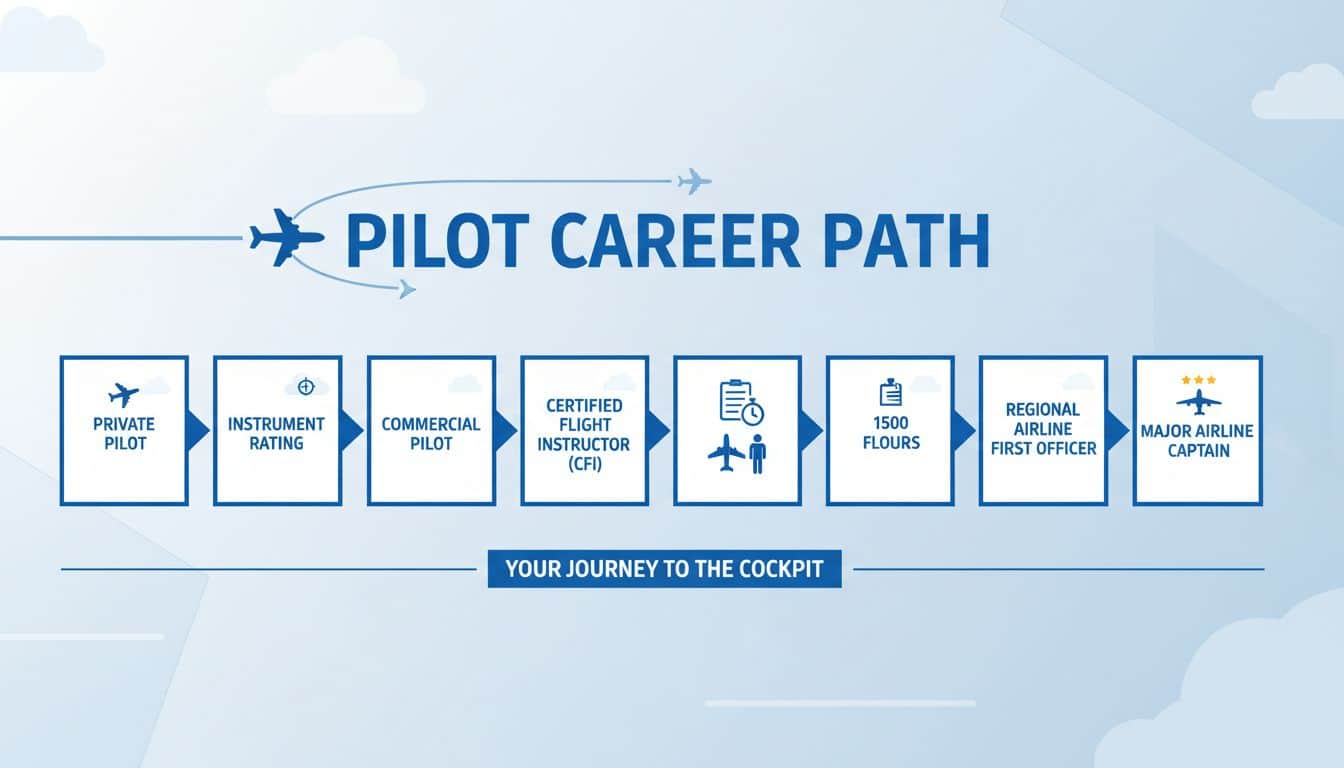
Most pilots then build 1,500 hours of flight time, earn an Airline Transport Pilot (ATP) certificate, and begin as a first officer at a regional airline before advancing to captain or transitioning to a major airline.
Step-by-Step Training Progression
- Private Pilot Certificate
- Instrument Rating
- Commercial Pilot Certificate
- Certified Flight Instructor (CFI)
- Build 1,500 hours of flight time
- Airline Transport Pilot Certificate
- Regional Airline First Officer
- Captain (Pilot in Command)
- Major Airline First Officer or Captain
Airline Pilot Career Progression
Regional Airline
Most pilots begin their airline career at a regional airline, building turbine experience and seniority.
Becoming a First Officer
A first officer serves as second-in-command on the flight deck and is the standard entry-level airline position.
Pilot in Command (Captain)
The captain, or pilot in command, holds final authority and typically earns significantly higher compensation.
How Much Do Pilots Make?
Pilot salary increases substantially with experience and aircraft type.
- Regional Airline First Officer: $100,000+
- Regional Captain: $150,000+
- Major Airline First Officer: $200,000+
- Major Airline Captain: $250,000–$400,000+
Can a pilot make $500,000 per year? While rare, senior wide-body captains at major international airlines may approach this level depending on overtime, aircraft type, and union contracts.

How Long Does It Take and How Much Does It Cost?
Most pilots take 2–4 years to complete structured training programs and accumulate required flight experience. Total cost typically ranges between $80,000 and $120,000 depending on flight school and pathway program structure.
Types of Pilot Jobs Explained
Major and Regional Airlines
Structured seniority-based career progression and strong pilot hiring demand.
Cargo Pilot Career Path
Operate freight aircraft with competitive pay and unique schedules.
Corporate Aviation
Fly business jets with flexible routing and executive clients.
Medevac and Specialized Roles
High-responsibility flying requiring advanced decision-making skills.
Medical, Age, and Background Requirements
Is There an Age Limit?
You must be 23 to hold an ATP certificate. Mandatory retirement for airline pilots in the U.S. is age 65.
Medical Requirements
Professional pilots must pass FAA First-Class medical exams. Corrected vision is acceptable.
Background Checks
Airlines conduct background checks, employment verification, and security screenings.
Pilot Benefits Beyond Salary
- Travel benefits
- Retirement plans
- Union protections
- Structured career development programs
- Job stability from pilot hiring demand
What Does the 3-to-1 Rule Mean for Pilots?
The “3-to-1 rule” commonly refers to FAA flight time credit ratios for simulator training toward required hours. Understanding regulatory credit rules is important during ATP preparation.
Future of Aviation Career Opportunities
Artificial intelligence, sustainable aviation fuel, autonomous cargo aircraft, and pilot development programs are reshaping aviation career opportunities. Despite automation advances, human pilots remain essential decision-makers on the flight deck.
Final Thoughts
The modern pilot career path offers structured progression, strong earning potential, and long-term stability. Whether your career goals include regional airlines, major carriers, or specialized aviation roles, there has never been a clearer direct path to becoming a professional pilot.