

Airbus A320, Electrics
Airbus A320 Transformer Rectifier Unit (TRU): Working Principle, Types, and Aircraft Applications

Dec
A Transformer Rectifier Unit (TRU) converts three-phase AC power into regulated DC power. It combines a transformer and a rectifier in one compact component. Most aircraft use 115/200 V, 400 Hz AC. The TRU converts this input into stable 28 V DC for avionics, lighting and essential electronics. As a result, the TRU forms a key link in modern aircraft applications.
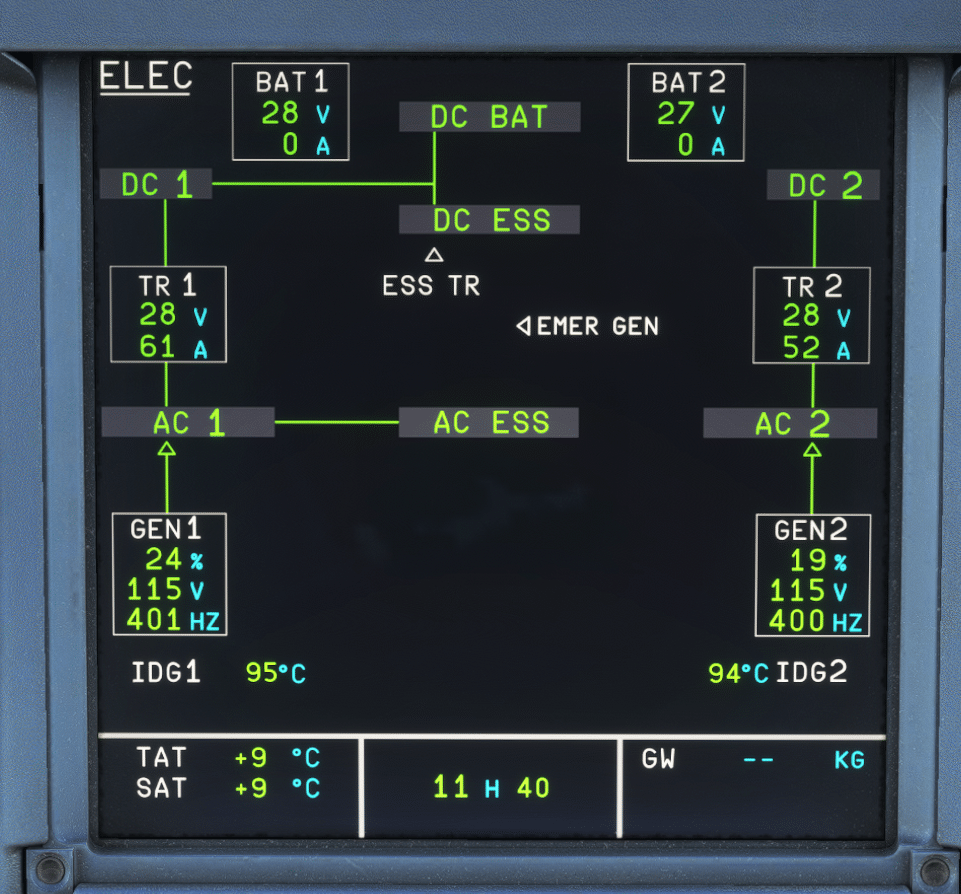
The Airbus A320 family uses several TRUs. TR 1 feeds DC BUS 1, TR 2 feeds DC BUS 2 and the ESS TR supports the essential DC network. This layout ensures stable voltage on all main and essential buses during both normal and abnormal electrical conditions.

A320 Basics, Limitations & SOPs
Complete A320 study guide by an Airbus pilot & instructor. Clear systems, logic & SOPs.
PDF • 365 pages • Lifetime updates
1. What a Transformer Rectifier Unit Does
A TRU performs two primary functions. First, it reduces AC voltage through the transformer stage. Then the rectifier stage converts the AC output into DC. Most units also include filters to smooth the waveform and limit harmonic content. This design improves overall power quality.
Aircraft depend on a reliable 28 V DC power supply. The TRU feeds systems such as flight guidance computers, radios, cabin lighting, control electronics and monitoring equipment. It also stabilises current flow to DC buses and supports aircraft battery charging.
Typical TRUs deliver 200 A at 28 V DC. Many units can support higher load peaks during pump starts or rapid changes in electrical demand.
2. How a Transformer Rectifier Unit Works
Most aircraft TRUs use a multi-pulse rectifier design. This architecture reduces harmonic distortion and improves power factor. It also improves reliability and temperature stability.
- Transformer section: It adapts the incoming three-phase AC input power and provides isolation.
- Rectifier section: It uses diodes or thyristors to produce direct current.
- Filters: They smooth the output voltage and reduce ripple and EMI.
Higher-pulse TRUs, such as 12-pulse or 18-pulse units, create better waveform quality. Consequently, they place fewer disturbances on the aircraft AC network.
3. TRUs in the Airbus A320
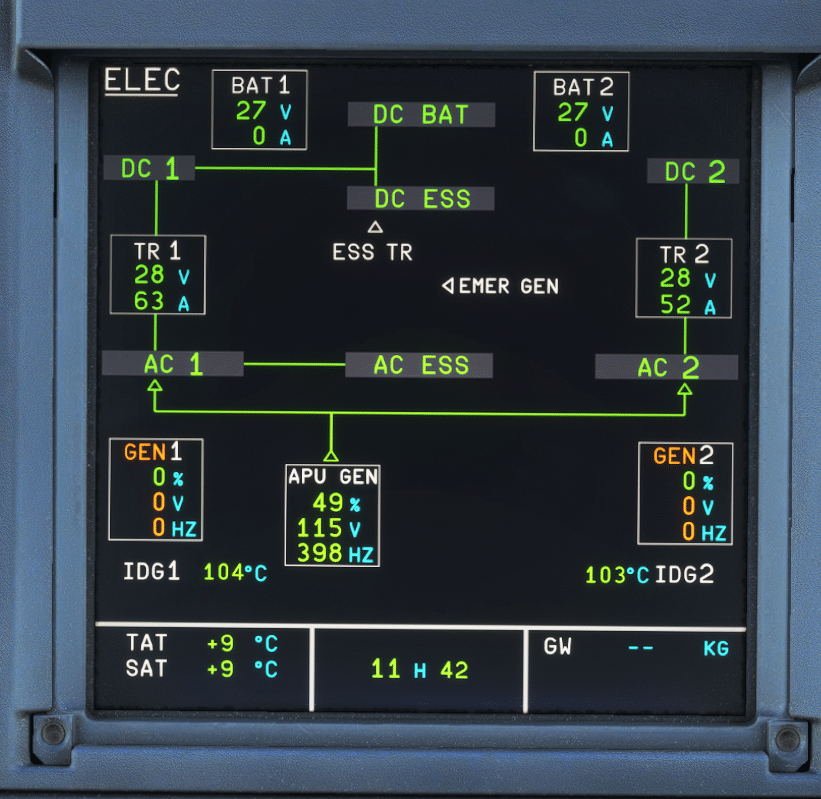
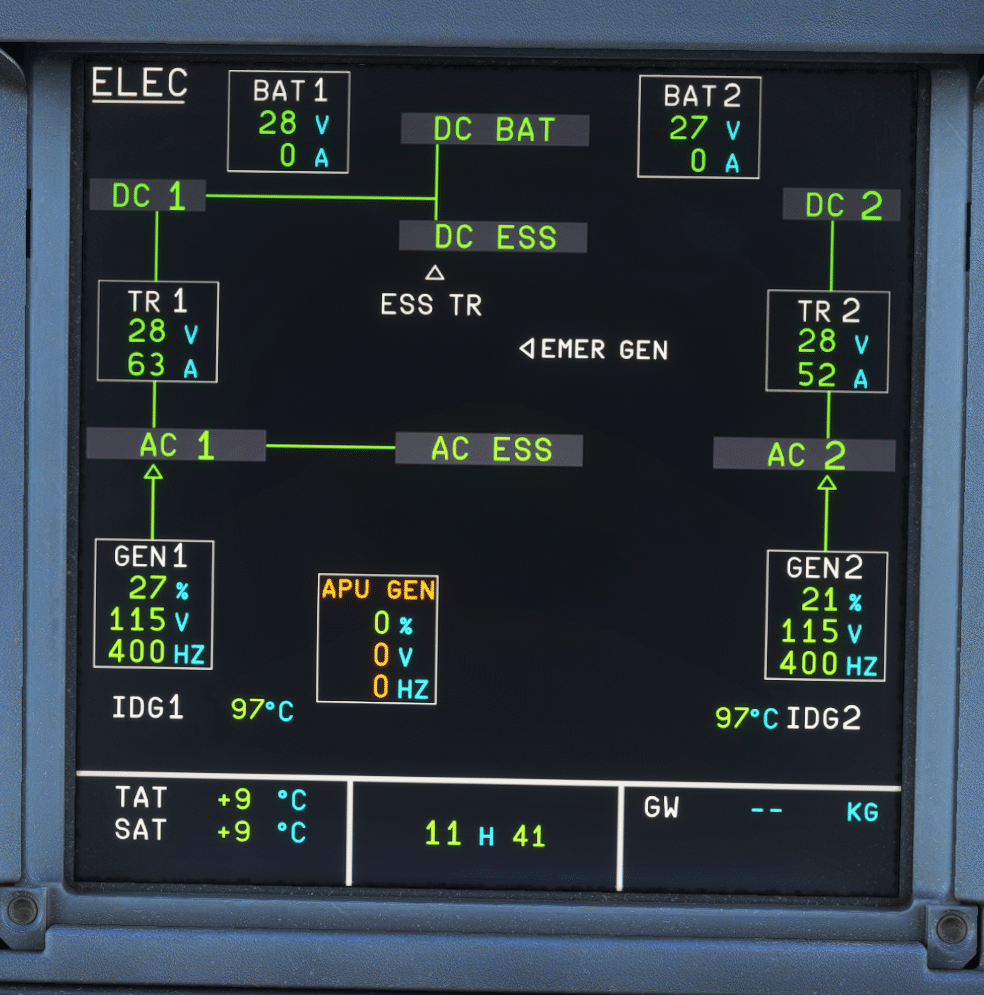
The A320 electrical system uses two main 115/200 V AC buses. The system also uses a 28 V DC network for avionics and control electronics. Each TRU converts AC from its associated AC bus into DC for a specific DC bus.
- TR 1 → DC BUS 1
- TR 2 → DC BUS 2
- ESS TR → DC ESS BUS (fed from AC ESS BUS)
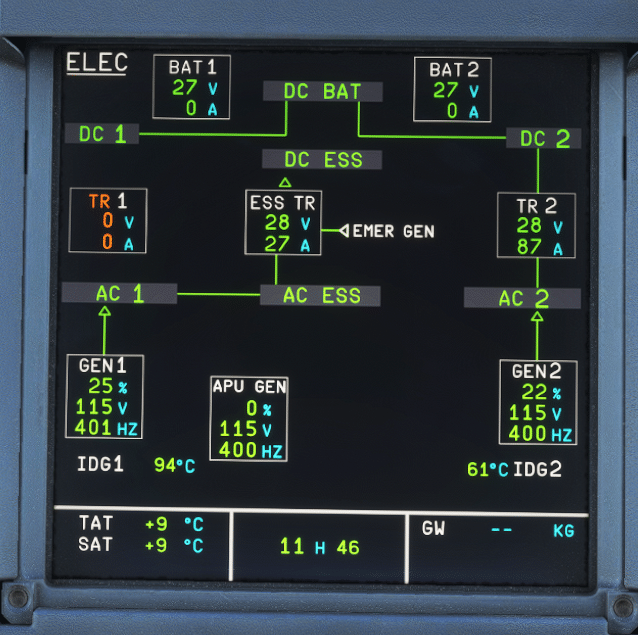
If both AC BUS 1 and AC BUS 2 fail, the Ram Air Turbine restores the AC ESS BUS. This power source feeds the ESS TR, which then restores the 28 V DC essential network.
4. Types of Transformer Rectifier Units
4.1 Standard TRU
A standard TRU uses a passive transformer and a diode bridge. It delivers well-filtered 28 V DC, and system load influences its exact output voltage. Operators value this design because it offers predictable behaviour and high reliability.
4.2 Regulated Transformer Rectifier Unit (RTRU)
A regulated transformer rectifier adds active control electronics. As a result, it maintains steady DC voltage even when load changes. It also improves power factor and reduces harmonic content.
4.3 Auto-Transformer Rectifier Unit (ATRU)
An Auto-Transformer Rectifier Unit replaces the isolated transformer with an autotransformer. This choice reduces weight and size. ATRUs remain common in high-power systems, especially those using ±270 V DC.
4.4 Next-Generation Smart TRUs
Smart TRUs use high-frequency conversion stages. They also improve power distribution across multiple DC buses.
5. Key Design Considerations
Engineers review several factors when they select a TRU. These factors influence stability, weight, efficiency and power quality.
- Input voltage: Usually 115/200 V, 400 Hz AC.
- DC output: 28 V or 270 V DC.
- Overload capability: Peaks of 150–300% rated current.
- Efficiency: Often above 85%.
- EMI performance: Must meet certification limits.
- Weight and size: Critical for installation.
6. TRUs in Ground and On-Board Use
Aircraft use TRUs both on board and on the ground. On-board units convert AC into 28 V DC for flight systems. Ground power TRUs provide 28 V DC for APU starts, maintenance work or avionics power during long turnarounds.
A320 Basics, Limitations & SOPs
Complete A320 study guide by an Airbus pilot & instructor. Clear systems, logic & SOPs.
PDF • 365 pages • Lifetime updates
7. Frequently Asked Questions
What is a TRU unit on an aircraft?
A TRU unit converts three-phase AC into 28 V DC. It supports avionics, lighting, communication systems and essential electronics.
What is the difference between a TRU and an RTRU?
A TRU uses a passive design. An RTRU includes active electronics that regulate output voltage and reduce distortion.
Is a TRU the same as a battery charger?
A TRU feeds the DC buses. A battery charger uses those buses and applies specific charging logic.
Why do aircraft use 28 V DC?
28 V DC keeps electrical current levels manageable, reduces cable weight and remains safe for technicians and equipment.
The transformer rectifier unit remains a key AC-to-DC converter in aviation. It supports clean power, stable voltage and reliable power distribution. As aircraft evolve, TRU designs continue to offer lighter, more efficient and more controlled solutions for future aircraft applications.