

Airbus A320
Airbus A320 Cockpit Guide
Mar
The Airbus A320 cockpit is one of the best-known flight decks in modern aviation. Designed for the A320 family, it combines a clean digital layout, side-stick controls, and fly-by-wire technology to help pilots manage flight efficiently. For many readers, the A320 cockpit stands out because it looks modern, organized, and highly standardized across the family.
What Is the Airbus A320 Cockpit?
The Airbus A320 cockpit is the flight deck used on the Airbus A320 family of narrow-body aircraft, including the A318, A319, A320, and A321. Airbus designed this cockpit around commonality, which means pilots can move across much of the family with similar procedures and a common type rating. That common design is one reason the A320 became such an important aircraft for airlines, pilots, and training organizations.
Unlike older flight decks that relied more heavily on analog instruments, the A320 flight deck uses digital displays and an Airbus-style operating philosophy. It is built to support efficient airline operation, clear system monitoring, and consistent handling characteristics across the Airbus A320 family.
Main Sections of the A320 Flight Deck
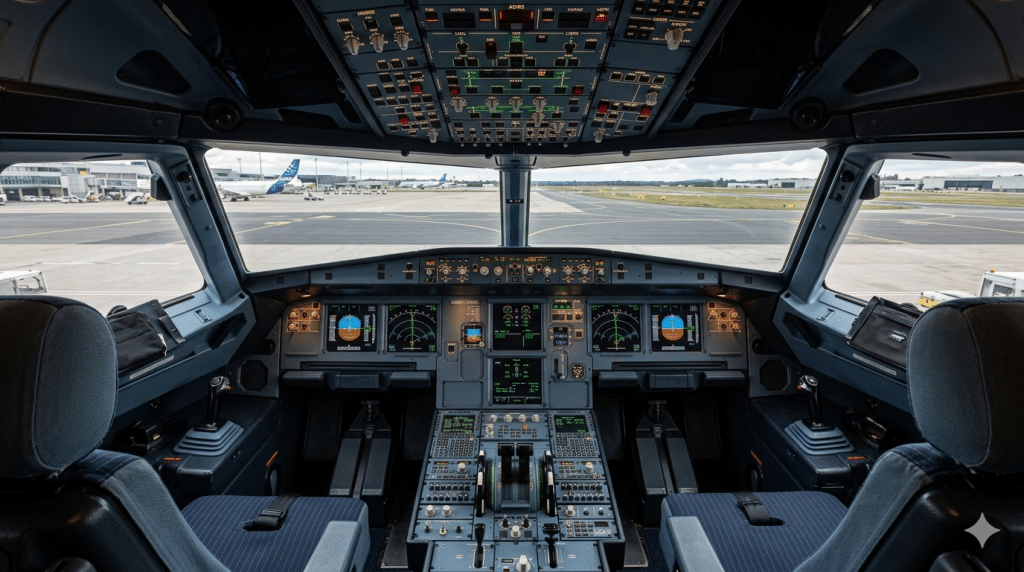
The cockpit is usually explained in four main sections. Understanding these areas makes it easier to read an A320 cockpit view or follow a flight simulator walkthrough.
Overhead panel
The overhead panel contains many system controls for electrical power, fuel, hydraulics, air conditioning, lighting, anti-ice, and other aircraft systems. It is central to checklist flow and daily operational use. In many ways, it acts as the system-management area of the cockpit.
Glareshield
The glareshield sits in front of the pilot and contains key autopilot and flight guidance controls. This is where pilots manage major flight modes during climb, cruise, approach and landing. It plays an important role in the aircraft’s automated flight operation.
Instrument panel
The instrument panel is the main display area. It presents flight, navigation, engine, and system information through digital screens rather than traditional mechanical gauges. These displays help the crew maintain situational awareness during takeoff, cruise, and landing.
Center pedestal
The center pedestal includes thrust levers, radio controls, and flight management inputs. It supports communication, navigation, and flight planning throughout the flight. This area also helps connect the cockpit’s design with real-world airline workflow.
Key A320 Cockpit Features: Sidestick, Fly-by-Wire, and Displays
One of the most recognizable features of the Airbus A320 cockpit is the sidestick, which replaces the traditional yoke seen in many other aircraft such as the Boeing 737. The sidestick is part of Airbus design philosophy and helps create the clean, open layout many pilots associate with the Airbus cockpit.
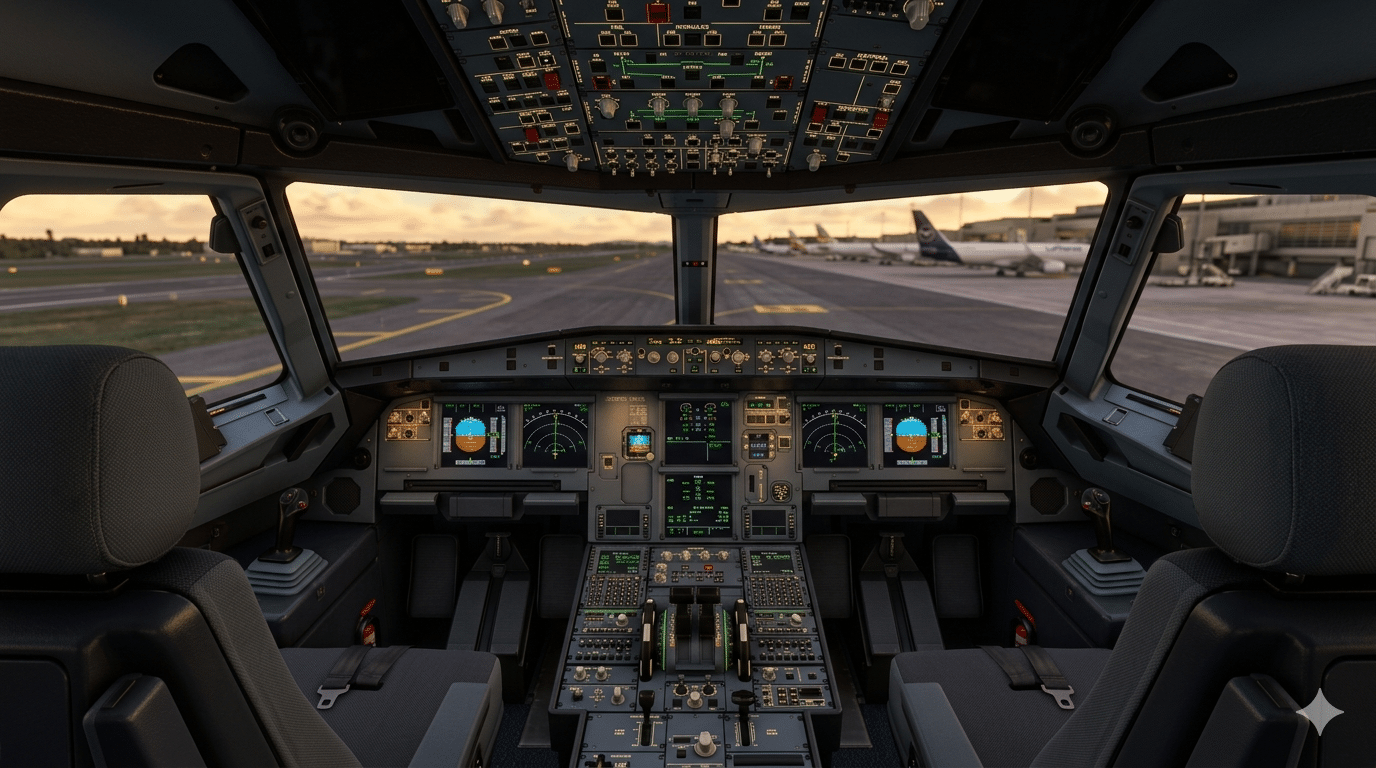
Another defining feature is fly-by-wire, sometimes shortened to FBW. In this system, pilot inputs are processed electronically through the aircraft’s flight controls rather than through direct mechanical linkages alone. This gives the A320 a modern control philosophy and supports the handling characteristics that make the type distinctive in commercial aviation.
The A320 also uses a glass-cockpit layout with integrated digital display screens. These include core flight, navigation, and system information in a format designed to reduce workload and improve pilot awareness.
A320neo and A320 Family Cockpit Commonality
The A320neo keeps the same basic cockpit philosophy as the rest of the family. That matters because airlines value commonality. A shared cockpit layout helps simplify pilot transition, recurrent training, simulator work, and day-to-day operation across the A320 and A321 as well as other family members.
This family logic is one of the biggest advantages of the Airbus A320 family. For an airline, commonality can reduce complexity. For a pilot, it supports a more consistent training and operational environment.
Training, Simulation, and Cockpit View Resources
Because the A320 is so widely used, it is also popular in flight simulator training and enthusiast content. Many users search for an A320 cockpit view to understand the layout, identify the main instrument areas, or learn how the aircraft is operated during a normal flight. That makes the type relevant not only for airline pilots but also for students, sim users, and aviation readers.
Whether someone is researching Airbus aircraft, preparing for simulator training, or simply learning how a modern single-aisle airliner works, the Airbus A320 cockpit remains one of the most recognizable and studied flight decks in aviation.
FAQ: Airbus A320 Cockpit
What is the Airbus A320 cockpit?
The Airbus A320 cockpit is the flight deck used across the Airbus A320 family, including the A318, A319, A320, and A321. It is known for its digital displays, sidestick controls, and fly-by-wire operating philosophy.
What are the main sections of the A320 cockpit?
The main sections of the A320 cockpit are the overhead panel, glareshield, instrument panel, and center pedestal. Together, these areas contain the aircraft’s system controls, flight guidance controls, displays, thrust controls, and flight management inputs.
What is fly-by-wire in the A320 cockpit?
Fly-by-wire in the Airbus A320 means pilot control inputs are sent electronically through flight control computers rather than only through direct mechanical linkages. This system supports Airbus’ modern flight control design and helps manage handling and flight envelope protection.
What are the overhead panels in the A320 cockpit?
The overhead panels in the A320 cockpit contain controls for key aircraft systems such as electrical power, fuel, hydraulics, lighting, air conditioning, and anti-ice. Pilots use this area heavily during checklists, setup, and normal flight operation.
What are the glareshield panels in the A320 cockpit?
The glareshield panels are located in front of the pilots and include the autopilot and flight guidance controls. These panels are used to manage heading, altitude, speed, navigation modes, and other important flight functions during all phases of flight.
What makes the Airbus A320 cockpit different from a Boeing 737 cockpit?
The Airbus A320 cockpit uses sidesticks and fly-by-wire controls, while the Boeing 737 uses a traditional yoke-based control layout. The A320 is also known for strong cockpit commonality across the A320 family, which helps simplify pilot transition and training.
Does the A320neo use the same cockpit layout?
Yes, the A320neo keeps the same core cockpit philosophy and layout as the rest of the A320 family. This commonality is one of the reasons airlines value the Airbus A320 family for training and operational efficiency.
Can you learn the A320 cockpit in a flight simulator?
Yes, the Airbus A320 is widely used in flight simulator training, from professional full-flight simulators to enthusiast desktop platforms. Many pilots, students, and aviation enthusiasts use simulators to understand the cockpit layout, displays, and normal procedures.